The Independent Filmmaker and the Distribution Paradox in the Streaming Era
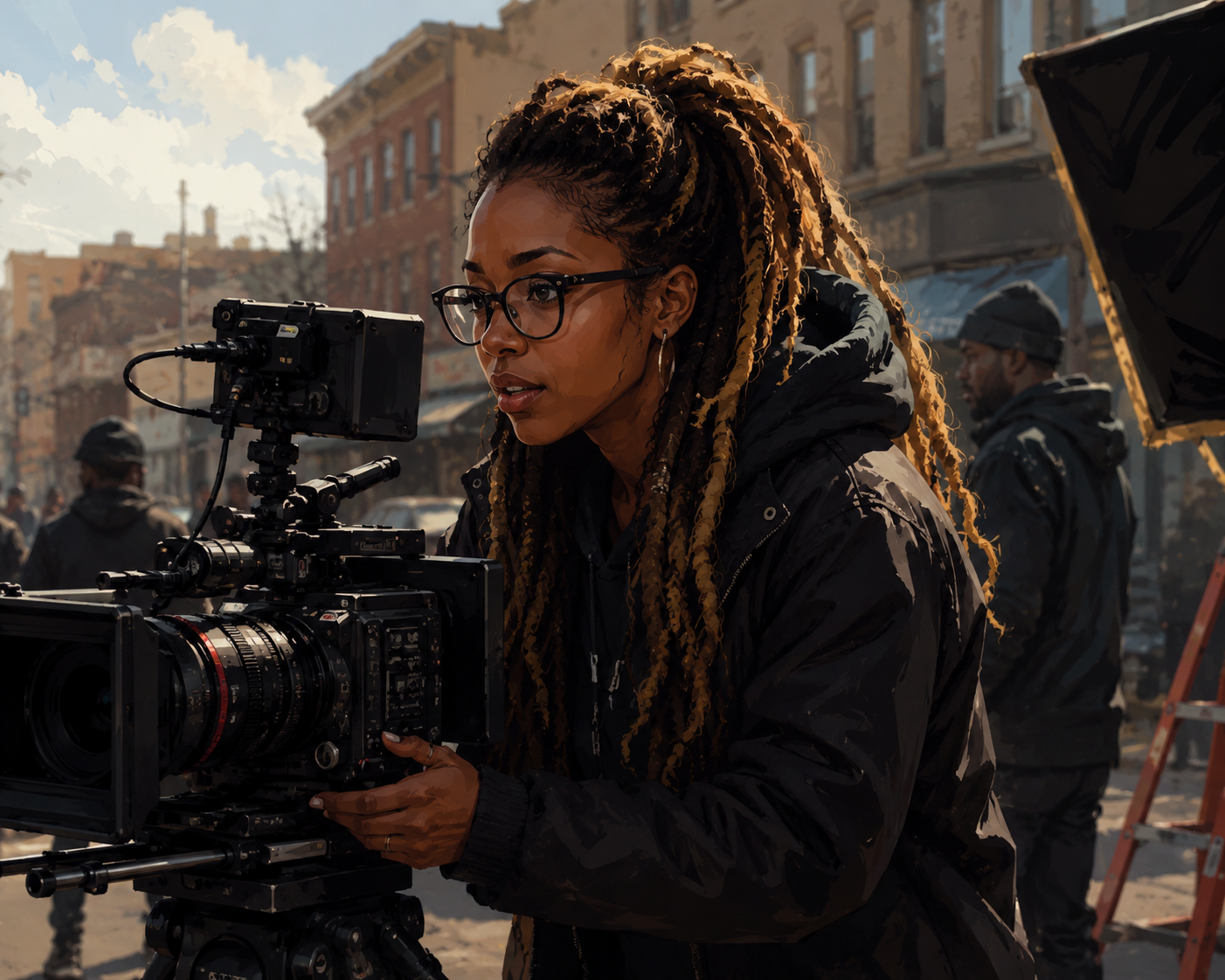
When many think of a creative, an artisan, or a maker, the image that comes to mind is someone working with their hands. A sewist cutting fabric at a table. A potter shaping clay at a wheel. A painter mixing color on a palette. The work is tangible, tactile, and deeply personal. And the challenges that accompany it, sourcing the right materials, finding the right tools, mastering the craft itself, are all part of getting the work done. Filmmakers are no different. Their craft simply lives in a different medium. And unlike many in this community, their most defining challenge does not arrive during the making. It arrives after. When the cameras stop rolling and the editing is finished, the question every independent filmmaker faces is one that has quietly ended more creative careers than any budget shortage ever could. Who is going to see this, and how does it get out into the world?
A Narrow Road
For decades, the path to distribution for an independent filmmaker was narrow, unpredictable, and largely dependent on who you knew. The festival circuit was the primary gateway. Sundance, Toronto, Tribeca. If your film landed a slot and the right people were in the room, you had a shot. A studio or specialty distributor might pick it up, offer a deal, and send it into theaters or onto home video. If not, you were largely on your own.
Studio deals were available but came at a significant cost. Creative control, revenue share, and sometimes the rights to the work itself were negotiated away in exchange for distribution. For filmmakers without industry connections, without representation, or without the resources to sustain a full festival run, the options were limited and the odds were not in their favor. Many films were made and never seen. The infrastructure to carry them into the world simply did not exist for everyone.
The independent filmmaker operated on the margins of an industry that was not built with them in mind.
The Changing Landscape
The digital era changed that. Streaming platforms, video on demand, and aggregator services have fundamentally restructured who gets to distribute and on what terms. The gatekeepers still exist, but there are more doors now than there have ever been. An independent filmmaker today has access to platforms that did not exist fifteen years ago, platforms that will take their work, place it in front of audiences, and in some cases share the revenue in ways that the traditional studio model never offered.
That access, however, comes with its own set of questions. Not every platform is built the same way. Not every deal is structured in the filmmaker's favor. And not every platform that markets itself as a home for independent creative work actually functions as one when you look closely at the terms, the costs, the audience reach, and the track record.
For the independent filmmaker in the creative, artisan, and maker community, knowing the difference matters. Here is a look at what is currently available, what each platform offers, and what to consider before committing your work.
The Platforms
Tubi — tubi.tv
Tubi is a free, ad-supported streaming service owned by Fox Corporation and available to over 100 million monthly active users. It is one of the most accessible and widely watched streaming platforms in the United States, with a content library of over 250,000 titles. For independent filmmakers, Tubi represents one of the most straightforward pathways to a large, diverse, and multicultural audience.
There is no submission fee for creators who apply directly through the Tubi for Creators initiative, now expanded and rebranded as the Creatorverse program. Revenue is generated through advertising, with filmmakers receiving between 50 and 70 percent of net ad revenue depending on viewership performance. The platform does not require exclusivity, meaning a filmmaker can distribute their work on Tubi while simultaneously pursuing other platforms.
Tubi has also partnered with Issa Rae and ColorCreative through its Stubios initiative, a program specifically designed to support aspiring filmmakers and bring creator-led content directly to the platform. This signals a genuine investment in independent and diverse voices, not simply as a talking point but as a programming strategy.
One area worth noting is privacy. Tubi is currently named in active class-action litigation alleging that the platform installs software on smart televisions to collect and sell detailed viewer data to third-party advertisers without explicit consumer consent. This does not directly affect the filmmaker's work or earnings, but for creators whose brand is built around community trust and ethical values, the association is worth considering.
For reach, accessibility, and demographic diversity, Tubi sits at the top of the landscape for independent filmmakers.
Filmhub — filmhub.com
Filmhub is a distribution aggregator, meaning it does not stream content directly to viewers but instead delivers independent films to over 130 streaming channels including Amazon Prime Video, Apple TV, Roku, Tubi, and YouTube Movies. For a filmmaker who wants their work placed across multiple platforms simultaneously without giving up ownership rights, Filmhub offers a genuinely creator-friendly model.
The revenue split is 80 percent to the filmmaker and 20 percent to Filmhub, with no exclusivity required. The submission process is automated and does not involve an ideological vetting committee or a community vote. Work is evaluated on technical quality and basic content standards, not on whether it fits a particular worldview.
The cost structure has shifted in recent years. Filmhub now charges an annual subscription fee of $99 for up to five titles or $199 for up to twenty titles. Additional services such as professional artwork upgrades cost $275, and the ability to block a film from being uploaded to unsecured channels requires a monthly fee of $100 to $200. Filmhub has been documented uploading independent films to standard ad-supported YouTube channels rather than secure transactional tiers, which creates a piracy risk for filmmakers who cannot afford the blocking fee.
Customer support has also declined following a recent website overhaul, with filmmakers reporting opaque dashboards and discrepancies between reported and verified earnings.
Despite those concerns, Filmhub remains one of the most practical and transparent aggregator options available to independent filmmakers who want broad digital distribution without surrendering creative control or ownership.
Nebula — nebula.tv
Nebula is a creator-owned, ad-free subscription streaming service built specifically to give independent creators a home for content that falls outside the algorithmic pressures of YouTube. With over 680,000 paying subscribers and a model that distributes 50 percent of net monthly profits back to its creator pool, Nebula represents one of the most financially equitable platforms in the current landscape.
The revenue calculation is based on watch time rather than ad impressions, meaning a creator earns based on how much of their content audiences actually watch. Creators also hold a contractual right to 50 percent of the platform's sale price in the event of an acquisition, a level of financial participation that is essentially unheard of in traditional distribution.
The significant limitation for most independent filmmakers is access. Nebula does not have an open submission portal. Entry is by creator referral or direct recruitment through Nebula Talent. If you do not already have an established digital presence or a connection to someone already on the platform, getting in is not straightforward.
For filmmakers who can access it, Nebula offers a genuinely premium environment with an intellectually engaged subscriber base and no advertiser interference. Notable content on the platform includes the travel competition series Jet Lag: The Game, the feature documentary The Baltimore Scandal, and the scripted short film Dracula's Ex-Girlfriend.
Fearless — fearless.li
Fearless is an independent subscription streaming service built around a clear and unapologetic mission. It exists to champion diverse, underrepresented voices in film, with a specific focus on LGBTQ creators, Black and Latinx filmmakers, women, indigenous storytellers, and creators with disabilities. With a library of over 3,000 titles from more than 1,500 independent filmmakers, it is one of the most genuinely inclusive platforms currently operating.
There is no upfront submission fee. Filmmakers can submit under a free agreement, which maximizes views without generating revenue, or a standard agreement, which generates watch-time royalties. The platform is non-exclusive, meaning your work can live on Fearless while also appearing elsewhere.
The challenge is financial. In 2020, Fearless transitioned its payout structure to a Customer Engagement Ranking system, which dropped royalty rates significantly to a range of $0.01 to $0.12 per hour of viewing. That rate makes it extremely difficult for a filmmaker to generate meaningful income from Fearless alone. The platform functions best as a brand-building and visibility tool rather than a primary revenue source.
For filmmakers whose work centers underrepresented communities and who are looking for an audience that is already seeking that kind of content, Fearless offers genuine value. The financial expectations simply need to be calibrated accordingly.
Means TV — means.tv
Means TV is the world's first worker-owned, anti-capitalist streaming service, founded in 2019 by filmmakers Naomi Burton and Nick Hayes in Detroit. It operates as a formal cooperative under the US Federation of Worker Cooperatives, funded entirely by subscriber fees with no advertising, no product placement, and no venture capital involvement.
Filmmakers who contribute original content to Means TV become Royalty Members of the cooperative, receiving a 10 percent share of the platform's annual profits in addition to standard licensing agreements, as well as board representation and voting rights. That level of structural participation in the platform itself is unlike anything offered by any other service in this landscape.
The content is politically specific. Means TV is built around working-class, progressive, and anti-capitalist storytelling. If your work aligns with that perspective, the platform offers a genuinely supportive and philosophically consistent home. If it does not, Means TV is simply not the right fit, and that is not a criticism. It is a platform that knows exactly who it is and does not pretend otherwise.
The financial reality is modest. The subscriber base is niche and the overall profit pool is limited, which means the 10 percent royalty share for filmmakers translates to a small dollar amount in practice. Like Fearless, Means TV functions best as a supplemental platform and community alignment tool rather than a primary distribution and revenue strategy.
Vimeo — vimeo.com
Vimeo has long been a respected self-hosting platform for independent filmmakers who want direct control over how their work is presented and sold. The transactional model gave creators 90 percent of revenue minus transaction fees, and the platform offered geo-blocking, regional availability controls, and direct pricing power that aggregators do not provide.
That era is ending. Vimeo has officially announced that Vimeo On Demand will permanently shut down on November 20, 2026. New seller verifications and page creation are already frozen. All new customer subscriptions will be disabled on September 21, 2026, and the full system will go dark on November 20, 2026.
For any filmmaker currently using Vimeo On Demand, the immediate priority is ensuring that buyers have enabled direct downloads before that date. For filmmakers who have not yet set up on Vimeo, there is no longer a reason to do so.
Vimeo is not a distribution option for the independent filmmaker moving forward.
Angel Studios — angel.com
Angel Studios is a streaming and theatrical distribution company that positions itself as a values-driven, community-powered alternative to traditional Hollywood distribution. Founded by the Harmon family, the company began as VidAngel, a content filtering service that was sued by Disney and Warner Bros. for copyright infringement, forced into bankruptcy, and settled for $10 million in 2020. The company rebranded as Angel Studios in 2021 and pivoted to original values-based content. It went public on the New York Stock Exchange in September 2025 under the ticker symbol ANGX.
The model is built around the Angel Guild, a paid membership community of approximately 2.2 million subscribers who vote on which projects the platform distributes. Basic membership is $12 per month and premium is $20 per month. Submitting a project requires a non-refundable $250 application fee. Projects go through a two-stage guild voting process and must score 70 or higher to qualify for distribution consideration. A passing score does not guarantee a contract. It is simply a prerequisite for internal review.
Unlike the other platforms reviewed here, Angel Studios carries additional challenges worth understanding. The guild membership skews heavily toward Christian faith-based, conservative audiences concentrated in the Midwest and Bible Belt, and the platform does not track racial or ethnic demographic data on voters or submitting filmmakers. The company posted a net loss of $170.5 million in 2025 and carries $105.3 million in debt against $38.9 million in cash, with analysts projecting losses through at least 2028. Three separate creator partnerships have ended in legal disputes, including breach of contract and fraudulent inducement claims.
For these reasons, independent filmmakers considering Angel Studios should approach with a level of due diligence that goes beyond what any other platform on this list requires.
The Platform and the Work
The options available to independent filmmakers today are more varied than they have ever been. Some platforms offer reach. Some offer equity. Some offer community. Some offer inclusion. And at least one offers a cautionary tale about what happens when a platform built for a specific audience tries to expand into a demographic it was never designed to serve and does not have the infrastructure to support.
When the cameras stop rolling and the editing is finished, the question remains. Who is going to see this, and how does it get out into the world? The good news is NOW there are options awaiting your informed decision.
